
OpenShift Virtualization is drawing increased enterprise attention as organizations reassess their VMware estates after Broadcom’s acquisition reshaped VMware’s commercial model. Broadcom (NASDAQ: AVGO) ended perpetual-license sales and moved VMware offerings toward subscription bundles, prompting many IT teams to evaluate Kubernetes-based platforms that can run both virtual machines and containerized applications.
That shift has inspired responses from many industry players, including simplyblock. Germany-based simplyblock has introduced a software-defined storage platform with business continuity and disaster recovery capabilities for Red Hat OpenShift Virtualization and OpenShift Container Platform to support transitions from VMware.
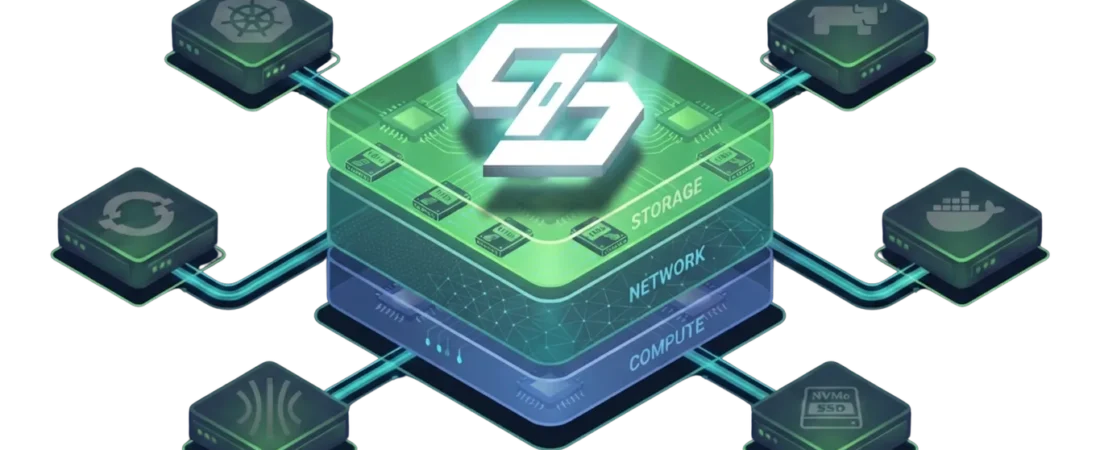
Simplyblock develops NVMe-based block storage for Kubernetes and OpenShift environments. Its platform supports both hyperconverged and disaggregated deployments and uses NVMe over TCP or RDMA with Storage Performance Development Kit acceleration. The company also offers snapshots, erasure coding, thin provisioning, multi-tenant quality-of-service controls and a Kubernetes Container Storage Interface driver.
The newly announced capabilities bring synchronous and asynchronous replication, failover and failback recovery, and off-site data protection into the storage platform rather than requiring a separately licensed disaster recovery product. For infrastructure teams, that could reduce the number of products and licensing decisions involved in protecting virtualized workloads across clusters and sites.
The company said OpenShift Virtualization users can use synchronous replication in stretch-cluster configurations for nearby sites. That approach uses distributed erasure coding and is designed to support a zero recovery-point objective, meaning an organization aims to avoid data loss when a site disruption occurs.
For sites farther apart, simplyblock offers asynchronous replication with recovery-point objectives as low as one minute, according to the company. The platform uses delta-based replication between clusters and includes monitoring for replication backlog, automated failback and application-consistent recovery across related volumes and workloads.
Another capability, described as live forward replication, enables organizations to move running volumes between clusters without disrupting them. That is intended to provide VMware vMotion-like mobility during maintenance windows, hardware refreshes, planned infrastructure changes or cluster relocations. Customers can also back up data to S3-compatible object storage for an additional off-site recovery option.
The company’s strategy addresses a gap that can emerge when enterprises modernize VM infrastructure. VMware environments have long combined functions such as vSAN, vMotion, Storage vMotion and Site Recovery Manager. In a Kubernetes-based virtualization environment, storage-layer availability, replication and recovery functions may instead be spread across the underlying platform, storage software and separate recovery products.
Marc Staimer, CEO of Dragon Slayer Consulting, said integrated continuity and recovery capabilities could remove a hurdle for organizations moving beyond traditional hypervisors and hyperconverged infrastructure. Simplyblock CEO Rob Pankow agrees, saying the company built DR functionality into its storage layer so customers would not need to assemble a separate collection of products or buy a separately licensed disaster recovery layer.
For enterprises considering OpenShift Virtualization as part of a VMware transition, integrated storage protection can meet existing recovery requirements without adding operational complexity. Simplyblock’s new offering provides its storage platform as a central part of that migration decision, rather than an infrastructure component addressed after workloads move. As with any migration, organizations must still test failover procedures against their application dependencies.