
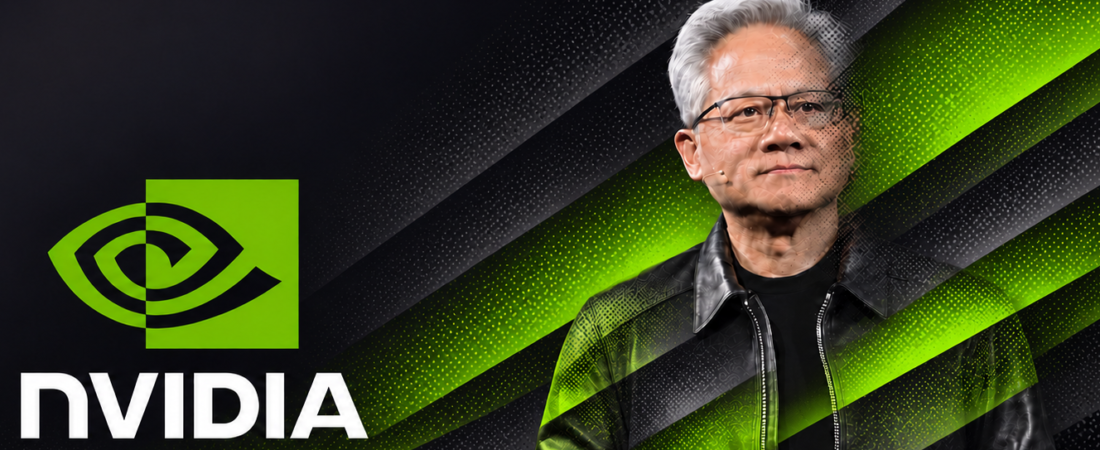
For 33 years, NVIDIA’s leather jacket was nearly as reliable a fixture in enterprise AI as its GPU roadmaps. Now NVIDIA (NASDAQ: NVDA) has lost its founder from the chief executive’s office, creating an immediate leadership test for the company at the center of global AI infrastructure spending.
Jensen Huang has resigned as president, chief executive and board member, effective immediately. The company named Colette Kress, its executive vice president and chief financial officer since 2013, as interim CEO while it searches for a permanent successor from internal and external candidates.
NVIDIA also appointed Harvey C. Jones as its first board chair. In its transition statement, the company said it expects customer commitments, operations and the technology roadmap to continue without interruption.
That assurance matters to enterprise customers that have made NVIDIA hardware and software central to AI training, inference and data-center modernization plans. The company’s platforms are embedded across cloud providers, corporate AI projects and the supply chains supporting large-scale accelerated computing. A leadership change does not automatically alter a procurement plan, but it does put product execution, capital allocation and strategic continuity under closer scrutiny.
Huang co-founded NVIDIA in 1993 and led its transformation from a graphics-chip company into the dominant supplier of high-performance computing systems used to build and run many AI models. His public role in setting technical direction — spanning CUDA software, GPUs, networking and integrated systems — made him unusually central to the company’s market identity and its relationships with customers, developers and investors.
In reporting separate from NVIDIA’s brief transition statement, Reuters and the Associated Press linked the resignation to scrutiny of Huang’s personal conduct and national-security concerns raised in recent media reports. NVIDIA said on Nov. 8 that its board had opened an independent investigation into reports that Huang had been the target of a foreign intelligence effort. The board said then that it had no reason to believe national security or NVIDIA secrets had been compromised.
The CEO-transition statement did not give a reason for Huang’s resignation. It focused instead on continuity, with board chair Jones describing Kress as a leader with a deep understanding of NVIDIA’s business, customers, operations and financial position. Kress said the company would continue to advance work in accelerated computing and AI while serving customers, partners, developers and shareholders.
Kress inherits an organization with a formidable technical bench but an unusually founder-shaped leadership model. Her immediate task is to maintain the company’s product cadence and customer engagement while the board conducts a search. NVIDIA is scheduled to report third-quarter fiscal 2027 results on Nov. 17, offering customers and investors an early opportunity to hear how management plans to address the transition.
For enterprise IT leaders, the practical question is less whether NVIDIA remains important than whether its execution stays predictable. The company’s ecosystem spans silicon, networking, systems software and developer tools, so a leadership disruption can reach long-range capacity planning. NVIDIA’s rivals have tried for years to gain ground in AI infrastructure; the transition gives them a rare opening to press the case for diversified deployments, even as NVIDIA works to show that its roadmap is bigger than any one executive.