
Microsoft has rolled out new AI-powered teaching and learning tools for Microsoft 365 Education, alongside fresh research suggesting AI is quickly becoming a routine part of classroom instruction and school operations.
The announcements, timed ahead of ISTELive 2026, include new capabilities for lesson planning, classroom management and student learning, plus Microsoft’s third annual AI in Education Report, based on a survey of more than 3,300 students, educators and education leaders across six countries.
The report points to continued growth in AI adoption in schools. Microsoft says 92% of students and education leaders and 88% of educators have used AI for school-related purposes, while 58% of education leaders say their institutions are already implementing or expanding AI initiatives. More than three-quarters of education leaders and educators also reported that their AI usage has grown over the past year.
Still, the report flags some persistent challenges. More than half of educators and over three-quarters of students say they haven’t received formal AI training, and many respondents want ongoing instruction on using AI responsibly. Academic integrity remains a sticking point too, with roughly four in ten students and educators naming it as a top concern around classroom AI use.
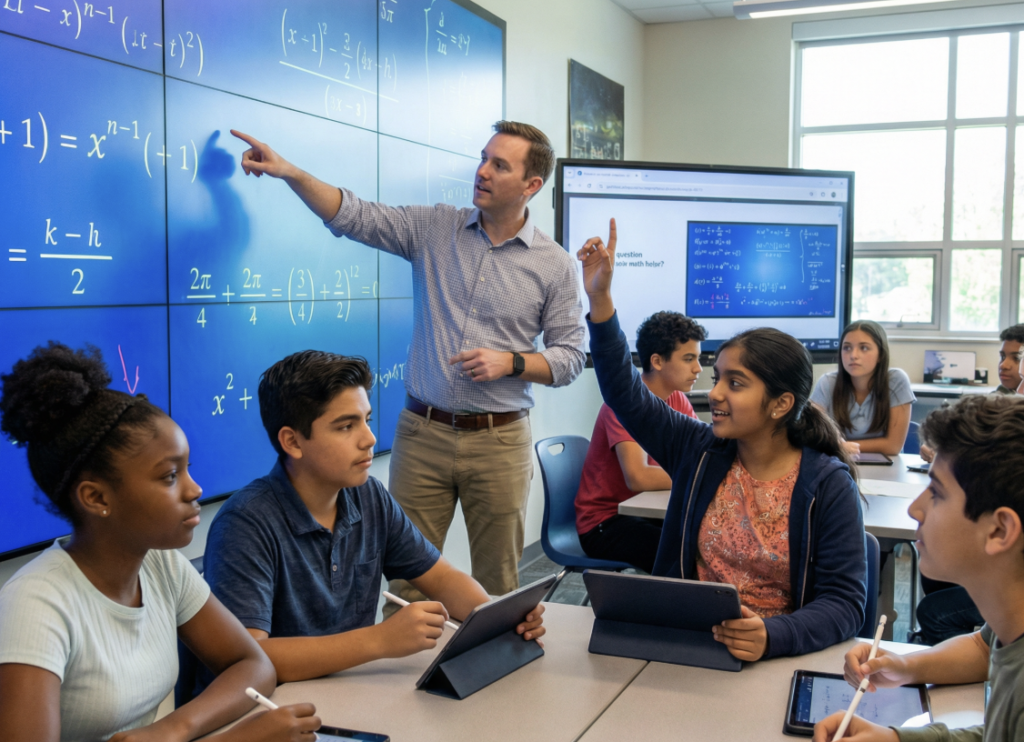
To help address these gaps, Microsoft is adding several AI features to Microsoft 365 Education at no extra cost. These include AI-assisted unit planning through the Microsoft 365 Copilot app, classroom tools that let educators set AI usage guidelines for assignments, and Learning Zone, which gives teachers more visibility into what’s happening in the classroom during live lessons.
The company is also rolling out new AI tools built specifically for students. Copilot Notebooks will let students organize course materials into AI-assisted study spaces, while a new Study and Learn Agent inside Copilot Chat is designed to offer guided practice and feedback, without doing the assignment for them.
Additionally, Microsoft is expanding its Microsoft Elevate for Educators program with new AI literacy training resources, including a credential pathway built with ISTE + ASCD. The goal, Microsoft says, is to help teachers build practical AI skills while encouraging responsible use in the classroom.

“Educators around the world are embracing AI as a classroom ally, and they’re now asking not if, but how to make the most of it,” said Matt Jubelirer, General Manager, Education Marketing at Microsoft. “For Microsoft, that means designing AI experiences grounded in learning science and shaped by educator feedback to support instruction while keeping teachers in control.”
The report was conducted by PSB Insights and surveyed 3,345 respondents from K-12 and higher education institutions in the United States, United Kingdom, Australia, Brazil, Japan, and Saudi Arabia.
Why it matters
As AI adoption in education picks up pace, schools appear to be moving from experimentation to actual implementation. Microsoft’s latest tools and research point to a broader push to help educators bring AI into teaching in a meaningful way, while still grappling with training gaps, responsible use, and academic integrity concerns.