
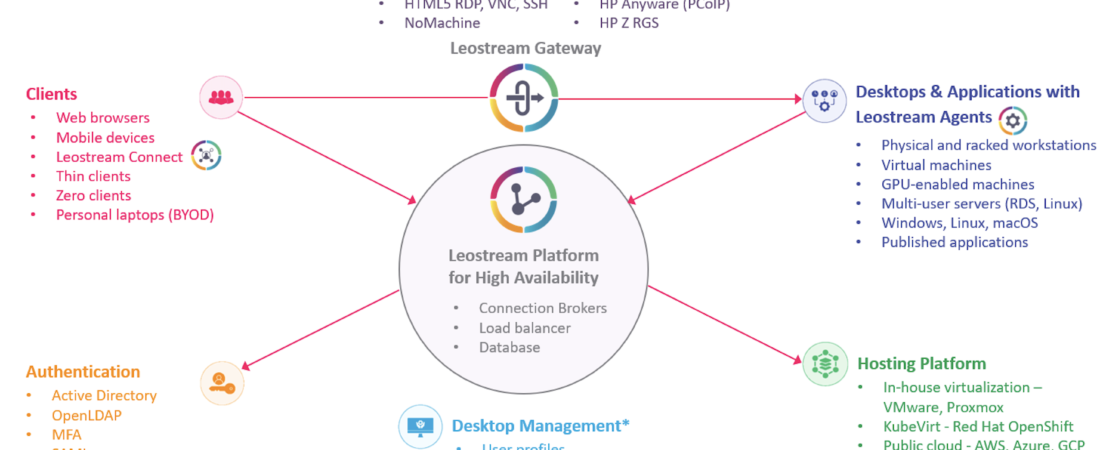
Leostream has released a major update to its Remote Desktop Access Platform, introducing new identity and access management capabilities, infrastructure integrations and automation features aimed at enterprise organizations managing hybrid and high-performance desktop environments.
Version 26.1 expands support for passwordless authentication, OpenID Connect, IPv6 networking, Proxmox virtualization and AWS cloud environments while adding new API capabilities designed to simplify administration and large-scale desktop management.
The update reflects growing enterprise demand for secure remote access platforms that support zero-trust security models, hybrid infrastructure and GPU-powered workloads.
Leostream Expands Identity and Access Management
Several of the new features focus on strengthening authentication and centralized identity management.
The platform now supports passwordless single sign-on (SSO) for Amazon DCV sessions, allowing users to authenticate through their organization’s identity provider without entering additional credentials. The release also introduces OpenID Connect (OIDC) authentication, giving enterprises another standards-based option for integrating modern identity providers and zero-trust security architectures.
Leostream also added support for joining Linux virtual machines to Active Directory domains, allowing organizations running mixed Windows and Linux environments to manage authentication, user assignments and security policies through a unified identity framework.
“26.1 sets another high bar for sophisticated, identity-driven access to digital workspaces, but it also increases options and flexibility throughout the infrastructure to deliver far more impact than other remote desktop tools, especially in hybrid and GPU-driven environments,” said Karen Gondoly, CEO of Leostream.
Platform Adds Infrastructure and Cloud Flexibility
The update expands support for modern enterprise infrastructure through several new platform integrations.
Leostream now supports the Amazon DCV Connection Gateway, giving organizations another option for securely routing remote desktop sessions across segmented networks while maintaining centralized policy controls.
The platform also adds native IPv6 support, enabling enterprises and service providers to deploy remote desktop environments across next-generation networking infrastructure without additional configuration.
For organizations using Proxmox Virtual Environment, new Proxmox Centers provide administrators with inventory management and virtual machine power controls directly from the Leostream platform.
New Automation Features Target Enterprise IT Operations
Leostream has also expanded automation capabilities through new RESTful APIs for desktop records.
The APIs allow IT teams to programmatically update desktop assignments, availability, metadata and operational status while integrating with service management platforms, orchestration tools, CMDBs and self-service portals.
The company also enhanced support for AWS EC2 hibernation, allowing cloud workstations to preserve active sessions while reducing compute costs when systems are not in use.
The feature is intended to improve efficiency for users running engineering applications, creative software, software development environments and other workloads that require lengthy startup times.
Enterprise Demand Continues to Drive Remote Desktop Innovation
As organizations continue supporting hybrid work, cloud computing and GPU-intensive applications, remote desktop platforms have become an increasingly important part of enterprise infrastructure.
Companies are placing greater emphasis on identity-based security, centralized management and infrastructure flexibility while reducing reliance on traditional VPN architectures.
Leostream said its latest release is designed to help enterprises modernize digital workspace management while supporting a wide range of deployment models across cloud, on-premises and hybrid environments.
The Bottom Line
Enterprise remote access is evolving beyond basic virtual desktop infrastructure as organizations adopt zero-trust security, hybrid cloud architectures and GPU-powered applications. Leostream’s latest platform update reflects those priorities by expanding identity management, automation and infrastructure support, giving IT teams more flexibility to manage secure digital workspaces across increasingly complex enterprise environments.