
Finance teams auditing travel and expense reports face a difficult balance: they need to identify policy violations and duplicate claims without inundating employees and auditors with false alerts. Broad AI models can interpret documents, but they are not inherently tuned to each organization’s travel rules, receipt requirements or risk thresholds. At scale, the cost of applying premium models to every expense line can also limit automation.
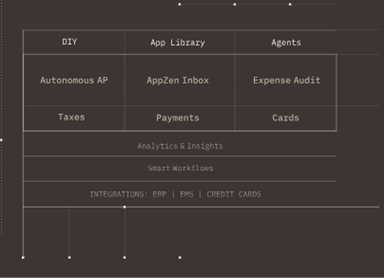
AppZen has introduced ZenLM Plus, a family of finance-specialized language models designed to address those challenges in its Expense Audit service. The company says the models combine document understanding with customer policy configuration, transaction searches, business rules and controls intended to provide auditors with evidence behind a decision.
The product is currently available to select AppZen Expense Audit customers, with general availability expected in December 2026.
ZenLM Plus is aimed at common travel-and-expense controls, including decisions on premium travel and gifts, receipt validity, receipt itemization, transaction verification and duplicate claims submitted across reports. Rather than apply a single universal policy, AppZen said the models use each customer’s configured categories, thresholds and risk definitions.
This will concern finance teams because an audit error can create different operational problems. A false positive can send a compliant employee expense to manual review, consuming auditor time and potentially frustrating employees. A false negative can approve a policy violation and allow unapproved spending to pass through. Businesses assessing AI-based audit tools will need to evaluate how those tradeoffs align with their own controls and escalation processes.
AppZen said ZenLM Plus runs within its Mastermind platform, which can route individual tasks to a specialized model, deterministic logic, a frontier model or a human reviewer. The approach is intended to avoid relying on one model for every finance decision. For example, the company said it can use a frontier model when that model performs better on a particular task.
The company’s published benchmark compared ZenLM Plus with seven unnamed-by-vendor frontier models across expense-audit tasks. AppZen reported that ZenLM Plus led six of seven comparisons, including a 97.4 F1 score in premium travel and upgrades, 10.8 points above the strongest frontier-model result it tested. F1 is a measure combining precision, or the share of flagged expenses that were genuine violations, and recall, or the share of actual violations detected.
Receipt verification was the exception in the company’s tests. ZenLM Plus scored 93.3 F1, while Gemini 3.1 Pro and Sonnet 5 each scored 94.1, according to AppZen. The company said its platform can route that type of task to a frontier model when appropriate.
The benchmark was designed and reported by AppZen, using anonymized production-derived expense patterns and targeted scenarios. It is not an independent comparison of general-purpose AI systems. Organizations considering the service should test performance against their own policy language, document formats, languages and acceptable false-positive rates.
AppZen also reported lower modeled inference costs for ZenLM Plus than for the frontier models in its comparison. It said its least-expensive tested frontier model cost roughly twice as much per 1,000 audited expense lines, while another cost about 50 times as much. Those figures compare API pricing for frontier models with GPU-provisioning estimates for ZenLM Plus, rather than a full cost-of-ownership analysis.
The practical question is whether specialized models can make comprehensive auditing financially viable while preserving appropriate human oversight, auditability and privacy controls. AppZen’s results suggest a potential path, but buyers will need to validate the model-routing approach, data handling and performance claims in their own finance environment.