

Calgary’s technology sector is getting the ingredients an enterprise-software company needs to grow: more technical talent, lower operating costs than the continent’s biggest technology centers, and a deep bench of customers with complicated operational problems. CBRE’s 2026 Scoring Tech Talent report found that Calgary’s technology workforce grew 56% from 2022 to 2025, the fastest rate among the 50 North American markets it ranked. For companies building software for regulated, asset-heavy, and business-critical environments, that is a meaningful backdrop.
The city is still better known for energy than for enterprise software, but the gap is closing. Calgary has a large base of businesses in energy, financial services, transportation, manufacturing, and the public sector—industries where technology teams have to keep systems running while improving them. That gives local software companies a direct view of the practical side of modernization: the work is never just about adding a feature. It is about changing a platform without breaking the processes around it.
Dyna Software, founded in Calgary in 2018 by CEO Ron Browning and Chief Product and Technology Officer Dyna Wang, has built its business around that kind of problem. The company develops tools for organizations that rely on ServiceNow (NYSE: NOW) to run core IT, employee, customer, risk, and operations workflows. Its pitch is straightforward: help teams move faster on the platform while keeping a clear handle on governance, platform health, and the change history that large enterprises need.
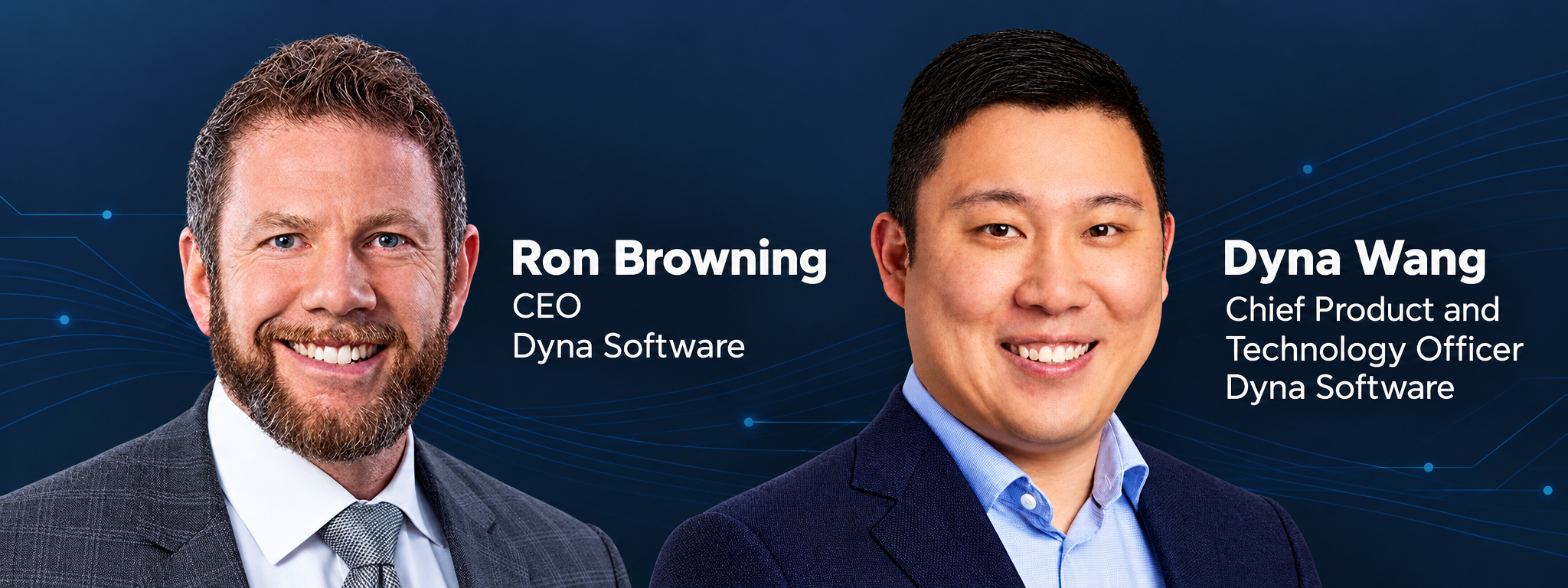
The founders came to the company through hands-on ServiceNow work. Both held operational roles as platform owners or principal architects and together built a services business focused on ServiceNow, CIO services, and service delivery. That experience exposed a recurring issue. As a ServiceNow environment grows, it becomes harder to tell what changed, why it changed, who approved it, and whether it will cause trouble later during an upgrade, audit, or integration project.
“The fundamental mission has remained consistent: helping organizations realize more value from their technology investments while reducing the risk and complexity of managing them,” Browning said.
That sounds familiar to anyone who has lived with a heavily customized enterprise platform. A simple request can travel through business stakeholders, analysts, architects, developers, test teams, and release managers before it reaches production. Every handoff adds time, but it can also add ambiguity. When a platform has years of custom workflows, data relationships, integrations, and exceptions behind it, even a small change can require more context than the original request suggests.
Dyna Software’s first major product, GuardRails, grew out of that operational reality. The company describes it as a ServiceNow-native governance application that gives teams more continuous visibility into development and configuration work. It is not meant to replace the controls that come with ServiceNow. The idea is to give platform teams a way to spot standards issues, keep technical debt from piling up, and maintain a clearer record of how the environment is changing.
That is a business issue, not just a developer preference. A difficult upgrade can consume months of internal effort. Poor documentation can turn an old configuration into a mystery. Weak source control can leave an organization without a reliable account of which code or configuration changed, who reviewed it, and what was deployed. In regulated sectors, that kind of uncertainty can create audit problems as well as operational ones.
GuardRails has since expanded into a broader governance platform. The company said its GuardRails Source Control Management capability lets teams archive, search, and recover the history of code and configuration changes. For a large ServiceNow customer, that history can support testing evidence, separation of duties, approval controls, deployment records, and the simple but important task of helping the next person understand why a system behaves the way it does.
“The challenge is enabling teams to innovate faster while maintaining confidence in the platform they depend on,” Browning said.
This is becoming more of an issue as AI reaches enterprise development work. AI can produce configurations, summarize requirements, and speed up repetitive tasks. But it can also make it easier to create changes faster than a company can review them. The issue is not whether AI can help build a ServiceNow solution. The concern is whether a team can explain the result, test it, govern it, and keep it maintainable after it goes live.
Dyna Software’s answer is Platform Copilot, an AI-focused product that aims to move teams from a business need through discovery, design, configuration, and validation with fewer manual handoffs. The company says its Percy AI Engineer can help users gather requirements, flag gaps, evaluate implementation options, generate ServiceNow configurations, and validate outcomes against the original business need. The product is positioned as a way to get from intent to a workable platform outcome more quickly, not simply as another coding assistant.
The distinction matters. Enterprise projects often stall because the original business request gets translated several times before anyone builds it. A stakeholder describes an issue. An analyst documents it. An architect turns it into a design. A developer configures the platform. A test team checks the result. That process exists for good reasons, but it can be slow and can produce rework when each group interprets the request differently.
Platform Copilot is designed to reduce some of that back-and-forth. Dyna Software says it can help business analysts, architects, developers, and platform owners spend less time on repetitive translation work and more time on decisions that require experience. The company is not presenting AI as a replacement for the people who understand an enterprise platform. Its larger argument is that AI should give those people more capacity without taking governance out of the picture.
That pairing—faster delivery alongside tighter control—is the heart of Dyna Software’s strategy. GuardRails focuses on visibility, standards, and platform history. Platform Copilot focuses on accelerating the path from a business need to a ServiceNow outcome. Together, they address two sides of the same problem: how to modernize a business-critical platform without letting speed become another source of risk.
Dyna Software describes itself as an Elite ServiceNow Build Partner, and it sells through a mix of direct engagement, consulting relationships, technology partners, and the ServiceNow Store. Its target customer is typically a medium-to-large enterprise with multiple development teams, business units, instances, or delivery partners. Financial services, healthcare, government, telecommunications, manufacturing, and energy are natural markets because they combine complex operations with a need for accountable change management.
The company’s recent progress reflects the way the ServiceNow market itself is changing. Browning cited the expansion of GuardRails, the addition of source-control-management functions, and continued development of Platform Copilot and its AI Engineer capabilities as important achievements. He also pointed to Dyna Software’s work with Deloitte Canada and its partnership with Norseman Defense as part of its effort to build relationships around the changing delivery model for ServiceNow services.
Consulting firms are under pressure to use AI to improve the speed and economics of delivery. Enterprise customers want more functionality, but they do not want to inherit a platform that is harder to explain or control. That creates room for vendors that can help both sides of the market. The winners will not be the companies that only generate more work. They will be the ones that help customers deliver usable work with enough context, controls, and traceability to operate it well.
Calgary gives Dyna Software an interesting place from which to make that case. The city’s technology story is not built only on startup funding or job-growth headlines. It is also shaped by customers that have real infrastructure, real regulatory obligations, and little patience for software that works only in a polished demonstration. A company building for those conditions has to make products that survive the messy middle of enterprise IT: old configurations, competing priorities, long approval paths, and teams that need to keep the lights on while they change the system.
That does not make a local company successful by default. Dyna Software still has to prove that its products can scale across different customer environments and that AI-assisted delivery produces dependable outcomes in the real world. But its focus is aimed at a real shift in enterprise software. As more changes are created with AI assistance, businesses will need better ways to understand those changes, decide which ones are safe, and preserve a record they can trust.
“Five years from now, Dyna Software should be known for establishing a better standard for enterprise platform and technology development, one that combines speed and intelligence with transparency, compliance, and accountability,” Browning said.
ServiceNow remains the company’s starting point, but Browning sees room to apply the same model to other enterprise platforms. That expansion will be the next test. For now, Dyna Software’s bet is clear: companies do not need to choose between faster development and responsible platform management. They need tools that make those two goals work together. If that approach lands with enterprise buyers, Calgary’s growing technology scene will have another example of a local company solving a problem that matters far beyond the city.