
Cisco is expanding its Secure AI Factory with NVIDIA by adding rack-scale compute systems from Supermicro to the architecture, a move intended to support larger AI training and inference deployments in enterprise, neocloud and sovereign-cloud environments.
The company announced the expansion Aug. 25 and said it will begin offering the Supermicro systems in October 2026. The addition brings liquid- and air-cooled high-density server options into Cisco’s portfolio of AI infrastructure built with NVIDIA technologies.
The change is aimed at organizations planning systems that go beyond isolated GPU servers. Cisco said the combined architecture will support rack-scale and dense GPU configurations, including deployments for trillion-parameter model training and high-throughput inference. It combines Supermicro compute and cooling hardware with Cisco networking, support and services.
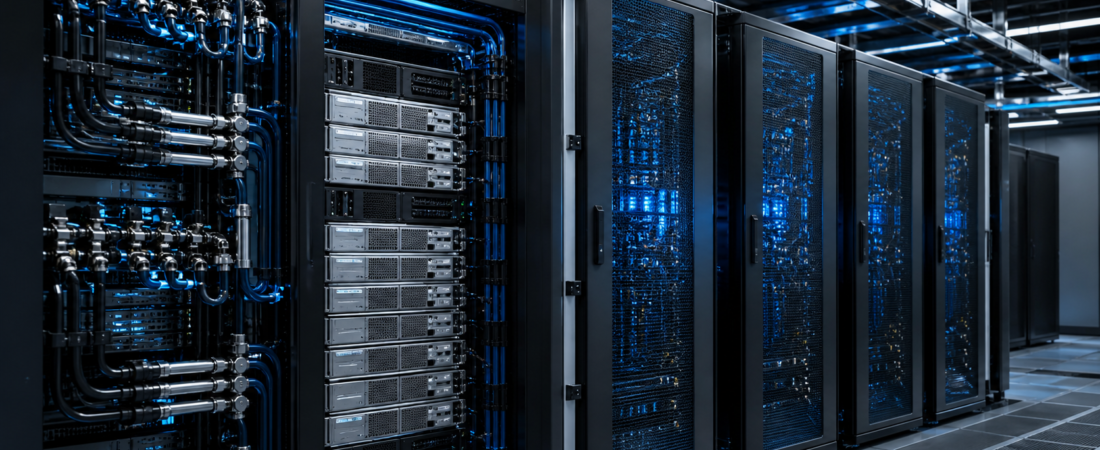
For enterprise infrastructure teams, a primary operational issue is coordinating compute, networking, power and cooling as AI clusters become larger. Cisco said customers will be able to deploy rack-to-fabric liquid cooling that pairs its liquid-cooled AI networking systems with Supermicro liquid-cooled servers. The company also said the systems will be validated and sold as part of its broader AI infrastructure portfolio.
Cisco’s network design uses its Silicon One-based switches at the front end and NVIDIA Spectrum-X-based switches at the back end. Cisco Nexus One is intended to unify those components in a single network architecture. The company said the expanded offering meets NVIDIA Cloud Partner requirements for neocloud and sovereign-cloud customers and that it is updating its enterprise reference architectures for the latest generation of NVIDIA AI infrastructure.
The offering also incorporates Cisco’s Cloud Control and what the company calls AgenticOps. According to Cisco, that will let customers correlate job health with metrics from compute, network-interface cards, optics and network performance, providing end-to-end observability. The release does not detail which operational functions will be generally available at launch or how the tools will integrate with existing IT operations platforms.
Cisco also announced Cisco Validated Infrastructure Services, aligned with NVIDIA Infrastructure Services. The service is intended to certify that deployed infrastructure matches its reference architecture. Cisco said it is investing in a large-scale AI lab to develop tools and test software for the service.
That integration can matter when an AI environment crosses several operational domains. A separate server, network and cooling procurement process can make it harder to determine whether a performance or availability issue originates in the application, the GPU system, the fabric or the physical environment. Cisco’s proposal is to package those layers into a validated design, although customers will still need to validate it against their own data-center standards and operating processes.
The business case rests on lowering deployment and operational risk for organizations building expensive AI capacity. Cisco said its and Supermicro’s supply-chain capabilities could help address delivery timing challenges, while validation and lifecycle services are intended to make infrastructure deployment more predictable. Those outcomes are company claims, not independently measured results.
For buyers, the October availability date is the next meaningful milestone. Before committing, teams will need to assess power and cooling requirements, capacity planning, hardware compatibility and the fit between Cisco’s full-stack design and their preferred model, data and cloud operating choices. The announcement nonetheless gives enterprises a more integrated option for scaling AI infrastructure where security, data control and operational support are central requirements.